§ 07Industries
Anyone who receives
liquid in bulk ends up
with empty totes.
Eight sectors, each with a genuinely different container problem. A concrete plant and a flavour house both use 275-gallon totes and almost nothing else about their requirements is the same — which is why we write a page for each rather than one generic one.
- Sectors
- 8
- States served
- 48
- Largest by volume
- Chemical blending
- Most documentation
- Food & beverage
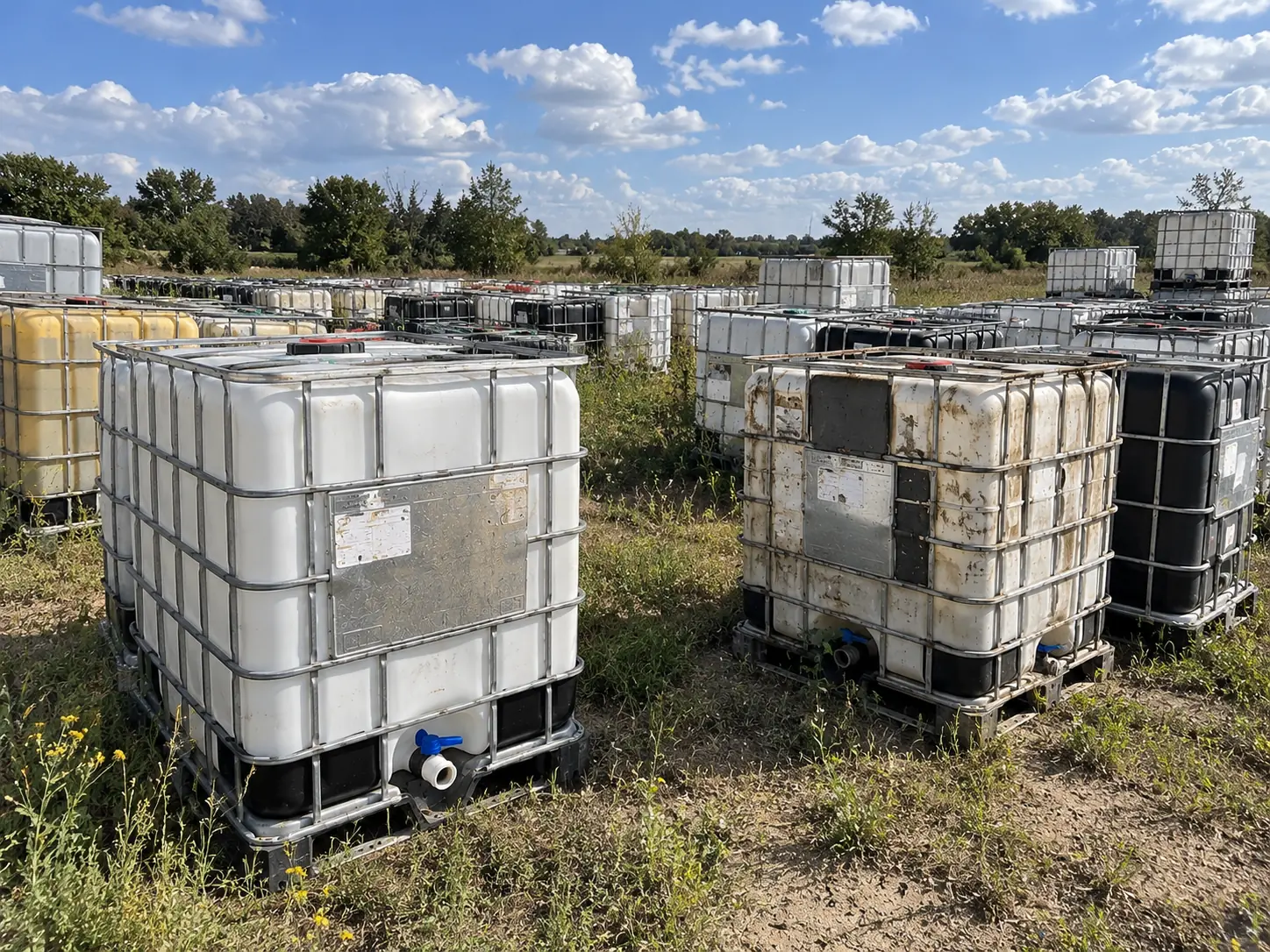
- Chemical blending — our largest sector
- Food & beverage — fully segregated path
- Agriculture — sell in summer, not winter
- Water treatment — grade B- is the right answer
- Breweries — two streams, never mixed
- Oilfield — never EPDM in oil service
- Construction — nobody sees the container
- Waste brokers — we take the container stream
§ 07.1Eight sectors
Find the one that matches your problem.
Each page covers the products that arrive in totes, what is distinctive about handling them, the specification we recommend, and the sector-specific problems with our answers.
- IND-01
Chemical manufacturing & blending
Our largest single sector by volume. Steady year-round flows, well-documented fill histories and the broadest range of residue classes.
- Surfactants and detergent concentrates
- Glycols and glycol ethers
- Caustics and mineral acids
- IND-02
Food, beverage & flavour
The sector where container documentation matters most. Segregated handling, food-only fill histories and a full documentation pack per load.
- Liquid sweeteners and syrups
- Edible oils and fats
- Flavour and fragrance concentrates
- IND-03
Agriculture & crop inputs
Seasonal, outdoor and rinsate-heavy. Three characteristics that change how containers should be specified, stored and collected.
- Liquid fertiliser — UAN and urea solutions
- Micronutrient solutions
- Herbicide and pesticide formulations
- IND-04
Water treatment & municipal
High volume, benign chemistry, cosmetically indifferent. The sector that gets the best value from the lowest grades we sell.
- Coagulants — alum, ferric, PAC
- Polymer flocculants
- Sodium hypochlorite
- IND-05
Breweries & distilleries
Small volumes, two distinct container streams, and a food-grade line that must never be crossed. The sector where segregation discipline matters most at the smallest scale.
- Caustic and acid CIP chemistry
- Peracetic acid and sanitisers
- Propylene glycol for chilling loops
- IND-06
Oilfield & industrial fluids
Hydrocarbon service, remote sites and hard handling conditions. The sector where gasket compound selection matters most and where EPDM is routinely fitted wrongly.
- Drilling fluid additives
- Corrosion and scale inhibitors
- Biocides and oxygen scavengers
- IND-07
Construction & concrete admixtures
Benign chemistry, brutal handling and total cosmetic indifference. The best possible home for our lowest tested grades.
- Water-reducing and superplasticising admixtures
- Air-entraining agents
- Set accelerators and retarders
- IND-08
Waste brokers & environmental firms
A significant share of our intake. We take the container stream; you keep the residue work. A clean division of labour that suits both sides.
- Mixed client-site tote accumulations
- Decommissioning and plant closure clearances
- Lease-exit yard clearances
§ 07.2What differs by sector
Four variables, eight answers.
Almost every sector difference reduces to these four questions. Answer them for your own operation and the specification follows.
| Sector | Appearance matters? | Permeation risk | Recommended grade | Pallet |
|---|---|---|---|---|
| Chemical blending | Sometimes | Varies by product | B, A- where visible | Plastic |
| Food & beverage | Yes | Critical | AA, rebottled | Plastic |
| Agriculture | No | Low to moderate | B / B- | Plastic or steel |
| Water treatment | No | None | B- | Plastic |
| Breweries | Split by stream | Critical on ingredients | B for chemistry, AA for ingredients | Plastic |
| Oilfield | No | High | B / B- | Steel |
| Construction | No | Low | B- | Steel |
| Waste brokers | No | Mixed | Whatever grades, graded individually | Any |
The column that surprises people is the third. Permeation risk is a property of the product, not the sector — but it clusters strongly by sector, which is why the recommendations differ so much.
§ 07.3What every sector gets
The parts that do not vary.
However different the specification, the process behind it is the same for everybody.
- Every unit graded individually against published criteria, never a lot average
- 100% of reuse stock pressure tested with a hold phase, no sampling
- Wash programme matched to the residue and recorded on the unit
- Previous-contents chain carried forward where the originating customer declared it
- A named person who answers your emails within one business day
- An honest lead time, including when it is bad news
- A Reclaim Ledger certificate for the volume you diverted
- 48states
- Lane coverage
- 93.9%
- Intake reused as containers
- 0.4%
- Mis-grade rate
- 1day
- Quote turnaround
Own fleet plus contract carriers.
Across all sectors.
Second check at staging.
Answered by a person.
“We were paying to have empties hauled away. Now the same totes come back to us washed and recertified, and the line never notices the difference.”
Not listed here?
These eight are our largest sectors, not an exhaustive list. Pharmaceutical intermediates, cosmetics, printing inks, textile processing, mining chemistry and municipal maintenance all arrive in totes too. Describe your product and duty and the specification follows the same way.
Describe your dutyThe two facts that matter
What goes in the tote, and who sees it.
Those two answers determine grade, wall material, gasket compound and pallet type. Tell us and we specify the rest.