§ 07Industries / IND-05
Breweries & distilleries
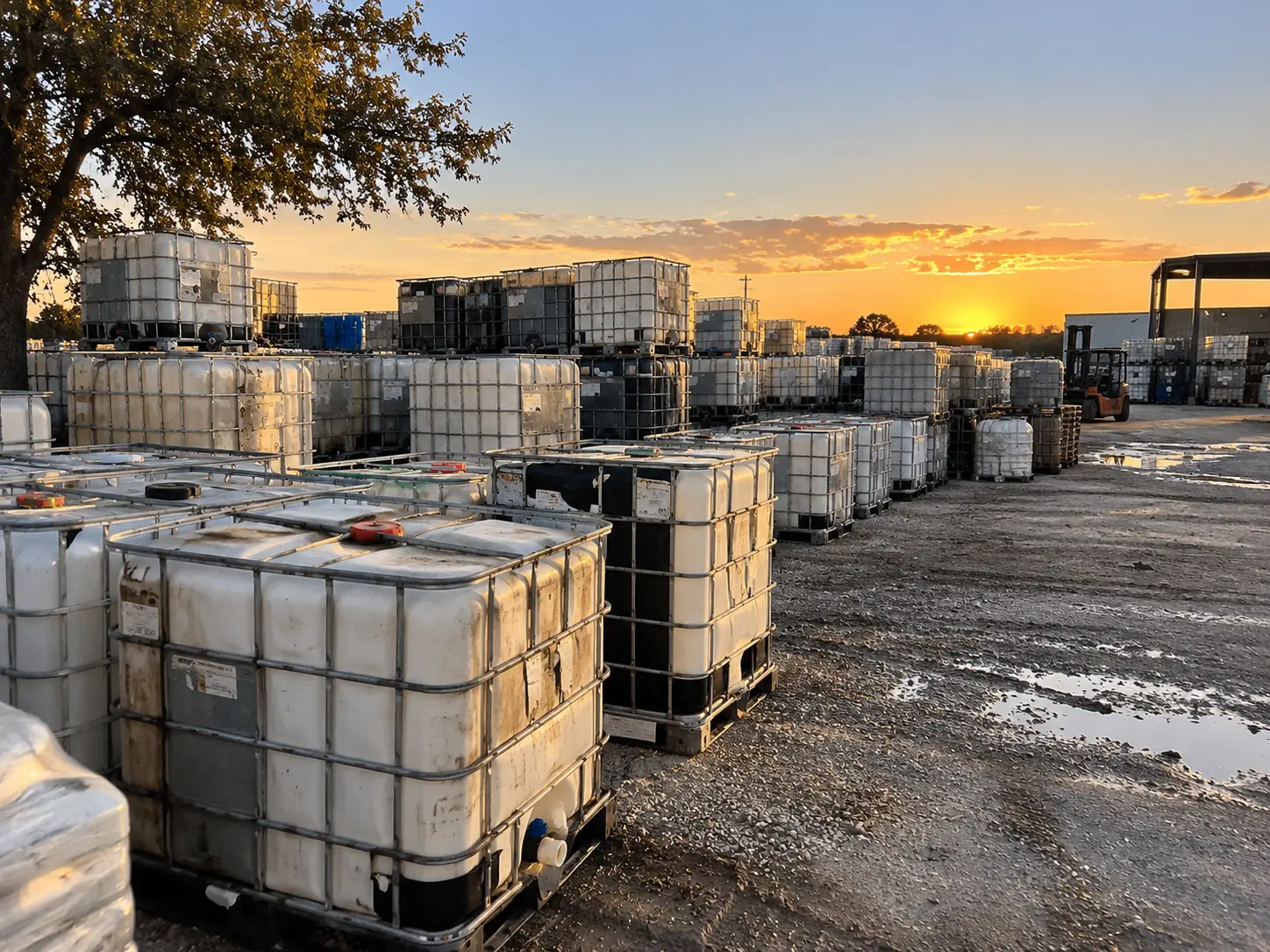
Craft producers receive cleaning chemistry, glycol and sometimes liquid ingredients in totes, then face a container problem at a volume too small for most reclaim operations to collect. It is solvable, with a little co-ordination.
- Volume
- 20–30 units a year, accumulating a few at a time
- Two streams
- Chemistry and ingredients, never mixed
- Space
- Usually constrained — yards are small
- Clustering
- Brewing districts cluster, which helps freight
§ 07.aWhat arrives in totes
The products we see in this sector.
- Caustic and acid CIP chemistry
- Peracetic acid and sanitisers
- Propylene glycol for chilling loops
- Liquid malt extract
- Fruit purée and juice concentrate
- Liquid sugar
§ 07.bWhat we recommend
Specification for this duty.
- Cleaning chemistry
- Reconditioned grade B — aqueous, appearance irrelevant
- Glycol
- Reconditioned grade B
- Liquid ingredients
- Rebottled or food-grade, segregated path
- Utility and washdown
- Grade B-, or an upcycled build for static use
- Closure
- Vented — most producers gravity-discharge
- 24units
- Accumulate to this before calling
- 2
- Streams to keep separate
- 1
- Collection a year is usually enough
- 0
- Chemistry totes that can return to food
Makes freight economics work.
Chemistry and ingredients.
Combined with a delivery.
Permeation is permanent.
§ 07.cReference
Repurposing, honestly assessed
| Use | Verdict | Reason |
|---|---|---|
| Spent grain or trub collection | Fine | Non-potable, non-regulated, cage supports the load |
| CIP solution make-up tank | Fine | But it permanently ends any food future |
| Glycol loop reservoir | Fine | Compatible and sensible |
| Wash-down water | Fine | Keep it off the food side |
| Fermentation vessel | No | Not designed for it; cleaning cannot be validated |
| Potable water storage | No | Unless food-only history and you treat the water |
| Anything on a vehicle | No | A repurposed tote is not a transport container |
| Ingredient storage in a chemistry tote | No | Permeation — this is the serious one |
The useful rule: once a tote has held cleaning chemistry, it is a utility container forever. Decide which side of that line each unit is on before you need it.
§ 07.dSector-specific problems
What goes wrong here, and what we do about it.
Four problems we see repeatedly in this sector, with the answer rather than a sales line.
The problem
Volumes below most reclaim operations' minimum pickup
Our answer
Accumulate to twenty-four units and register the lot so it can be matched to an outbound lane. Or co-ordinate with neighbouring producers — three breweries with ten units each make a good 30-unit pickup.
The problem
Ingredient and chemistry totes getting mixed up
Our answer
Mark and segregate at the point of emptying. Using an ingredient tote for caustic permanently destroys the thing that made it valuable, and it cannot be undone.
The problem
The temptation to repurpose totes as vessels
Our answer
Spent grain collection, CIP make-up and glycol reservoirs are fine. Fermentation vessels and potable water storage are not — cleaning cannot be validated and the fill history is wrong.
The problem
Yard space is tight and empties pile up fast
Our answer
Combine a summer collection with the delivery of next year's chemistry totes, so one trailer does both movements.
§ 07.eOther sectors
Different problem? Different page.
Each of these covers a genuinely different container requirement rather than the same text with the name changed.
- Chemical manufacturing & blending
- Food, beverage & flavour
- Agriculture & crop inputs
- Water treatment & municipal
- Oilfield & industrial fluids
- Construction & concrete admixtures
- Waste brokers & environmental firms
Services used most in this sector
Sector-specific quote
Pricing for breweries & distilleries.
Give us the product, the volume and the duty. We'll specify the grade, the gasket and the pallet, and tell you if a cheaper option would do the same job.