Skip to content
  • 412,000 totes pulled back out of the waste stream
  • 24,700 tons of HDPE diverted from landfill
  • 61,800 tons of CO₂e avoided
  • 19.4M gallons of process water saved
  • Zero-landfill operation since 2016
  • 48 states served from one yard
  • A reused tote beats a recycled tote — every single time

§ 05.5Size Guide / Grading Scale

Our grading scale,
published so you
can hold us to it.

Most reconditioners use grade letters without defining them, which makes the letters worthless — a supplier's grade A can mean whatever that week's stock happens to look like. Here is our complete scale with the exact condition criteria for each grade. If a unit arrives not matching its grade, this page is the document to quote at us.

Grades
7
Graded
Individually, every unit
Checks
Intake and staging
Mis-grade rate
0.4% FY2025
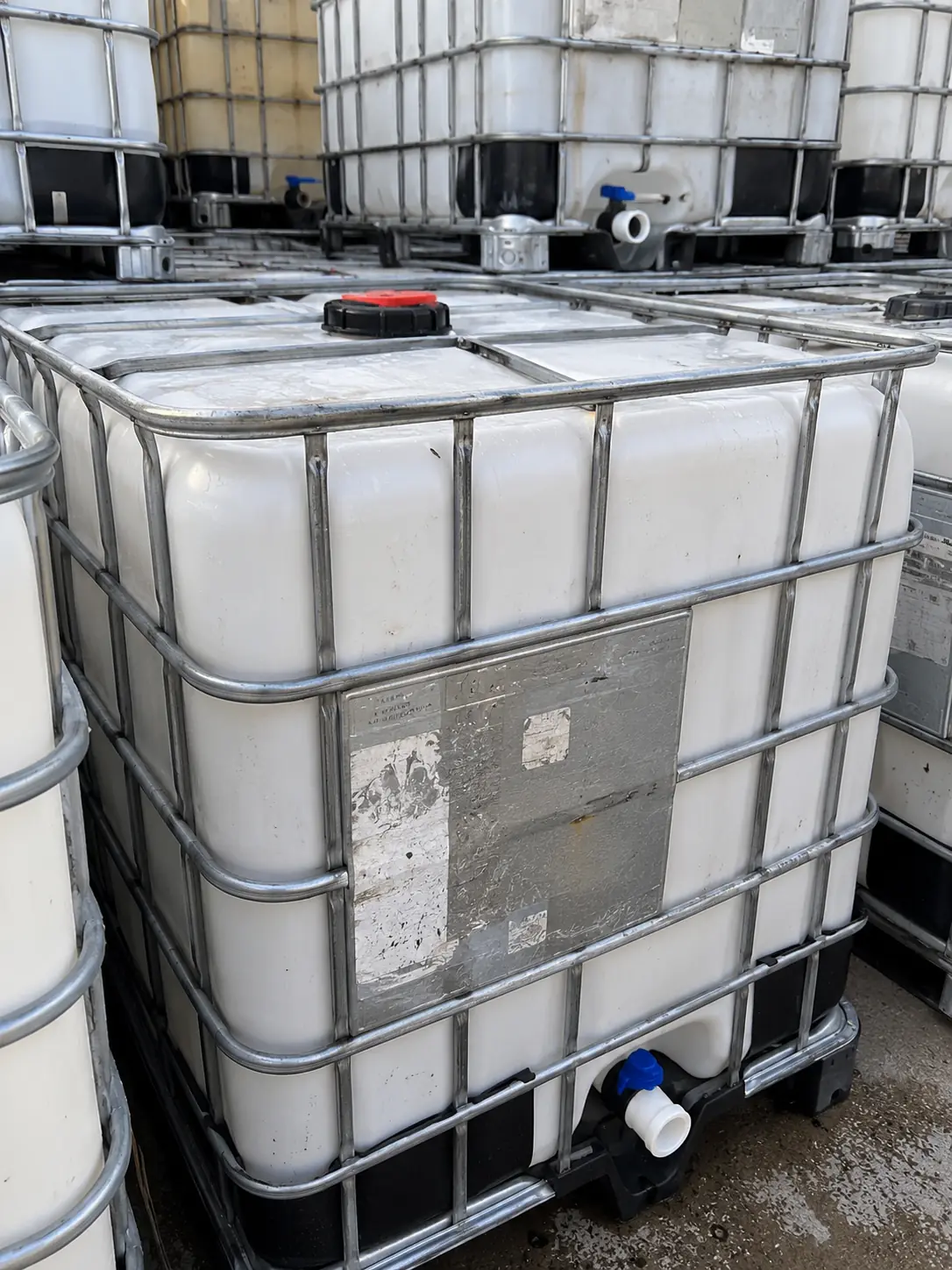
Close-up of an IBC tote cage, bottle and data plate during grading

Form 01 / Reclaim request

Not sure which grade?

Leave the Grade field blank. Describe the duty and a grader will recommend one.

A real, permanent address — we reply here.

US or Canada · (XXX) XXX-XXXX

US state or Canadian province

ZIP 60426 · or Canadian M5V 2T6

Whole units · 48 fills a trailer

Leave blank and we'll advise

Required. We use your details only to price and schedule your request — never resold, never shared.

§ 05.5.1At a glance

Seven grades, from food-contact to feedstock.

Grade summary
GradeNameBottleTestedWashedUN recertTypical duty
AAFood gradeUnused / food-onlyYesHigh-temp sanitisingYesFood, beverage, flavour
ARebottledNewYesN/A — new bottleYesSensitive or visible duty
A-Washed & testedOriginalYesMatched programmeYesProduct-facing industrial
BTriple rinsedOriginalYesTriple rinse min.UsuallyGeneral industrial
B-Rinsed, cosmetic wearOriginalYesRinsedCase by caseWater, brine, washdown
CAs-is, unwashedOriginalNoNoNoNon-product use only
RReprocess onlyFailedFailedNoMarking removedFeedstock / upcycled build

Grades AA, A, A-, B and B- are all pressure and leak tested with a hold phase, with no statistical sampling. C is explicitly untested. R has failed.

100%
Units graded individually

Never a lot average.

2
Independent grade checks

At intake and again at staging.

0.4%
Mis-grade rate FY2025

Units returned as not matching grade.

93.9%
Intake grading AA to B-

The share that returns to service.

§ 05.5.2Full definitions

Every criterion, for every grade.

A grade is awarded only when every criterion listed under it is satisfied. Failing any single criterion moves the unit down.

AA

Food grade

Unused or food-only bottle on a fully segregated path, with complete documentation.

All criteria must be met

  • Bottle unused, or every declared fill in its history was food-contact
  • Handled exclusively on the segregated food-grade path — never shared wash water or racking
  • High-temperature sanitising wash cycle completed and recorded
  • Pressure and leak tested with hold phase, passed
  • New valve, gasket and fill cap — no reclaimed fittings
  • No odour, staining or residue after the sanitising cycle
  • Full documentation pack: resin reference, fill history, wash record, segregation attestation

Typical dutyFood, beverage, flavour, nutraceutical and any product where trace contamination matters.

A

Rebottled

Brand-new bottle fitted into a reclaimed, jig-checked and straightened steel cage and pallet.

All criteria must be met

  • Bottle new, virgin HDPE, never filled
  • Cage passed geometry jig in all three axes; straightened where needed
  • All welds inspected, no fatigue cracking
  • Pallet sound or replaced
  • New valve, gasket and fill cap
  • Full UN/DOT 31HA1 marking applied and recorded
  • Pressure and leak tested, passed

Typical dutyPermeation-sensitive products, retail-adjacent or customer-visible duty, regulated fills needing clean bottle history.

A-

Washed & tested

Original bottle, wash programme matched to residue, pressure tested, light cosmetic wear only.

All criteria must be met

  • Original bottle, declared fill history available
  • Wash programme selected to match residue class and recorded on the unit
  • Pressure and leak tested with hold phase, passed
  • No permeation staining visible after wash
  • Cage straight, galvanising intact, no weld cracking
  • Light cosmetic scuffing permitted on cage; bottle visually clean
  • Valve and gasket new or verified sound
  • UN/DOT recertification available

Typical dutyGeneral product-facing industrial fills where appearance matters but a new bottle is not required.

B

Triple rinsed

Washed, tested, structurally sound, with visible cosmetic wear on cage and bottle.

All criteria must be met

  • Original bottle, declared fill history available
  • Triple rinse minimum; heavier programme where residue required it
  • Pressure and leak tested with hold phase, passed
  • Light to moderate permeation staining permitted
  • Cage may show scratching, scuffing and minor galvanising loss
  • Cage geometry within jig tolerance — no deformation preventing stacking
  • Valve and gasket sound; replaced where chemically attacked
  • UN/DOT recertification usually available

Typical dutyGeneral industrial, non-critical fills. The volume grade and the best value in the catalog.

B-

Rinsed, cosmetic wear

Tested and structurally sound, with significant staining or scuffing. Function over appearance.

All criteria must be met

  • Original bottle, fill history available where supplied
  • Rinsed to the appropriate programme
  • Pressure and leak tested with hold phase, passed
  • Permanent staining permitted, including heavy pigment or dye staining
  • Cage scratching, galvanising loss and cosmetic deformation permitted
  • Geometry still within jig tolerance for safe handling and stacking
  • Valve and gasket functional
  • UN/DOT recertification case by case

Typical dutyWater, brine, washdown, de-icing, concrete admixtures — anything where cosmetics are irrelevant.

C

As-is, unwashed

Sold untested and unwashed, exactly as received. Not for product service.

All criteria must be met

  • No wash performed
  • No pressure or leak test performed
  • Residue may remain — declared to the buyer as received
  • Structural condition described but not certified
  • No UN/DOT recertification
  • Sold explicitly as-is with no representation of integrity

Typical dutyNon-liquid use, storage of non-critical solids, buyer's own reconditioning, or feedstock.

R

Reprocess only

Failed test or beyond economic repair. Material feedstock, not a container.

All criteria must be met

  • Failed pressure or leak test, or
  • Stress crazing across a weld seam or valve boss, or
  • Heat distortion compromising geometry, or
  • Cage fatigue cracking beyond repair
  • Not sold as a container under any circumstances
  • UN marking removed or obliterated before disposition

Typical dutyGranulation and hot wash into recycled HDPE, or diversion to an upcycled build if watertight at atmospheric pressure.

§ 05.5.3How grading actually works

One technician, one tote, one jig.

Grading is the only genuinely skilled judgement in this building and it cannot be automated. A technician takes one unit at a time and works through a fixed sequence: bottle walls under light for stress crazing, cage into the geometry jig, pallet feet and deck, valve threads, cap seat, gasket condition, and finally the residue evidence against the declared fill history.

The sequence is fixed because order matters — you check the cheap disqualifiers before spending time on the expensive assessments. A unit with a cracked weld does not need its residue profiled.

Every wholesale load is then re-checked at staging by a different personagainst the ordered grade. That second pair of eyes is where mis-grades get caught, and it is why our mis-grade rate is 0.4% rather than the several percent that is normal in this industry.

Grading time per unit
3–6 minutes
Checks per unit
11 fixed assessment points
Second check
Different technician, at staging
Dispute remedy
Replacement or credit, your choice

What moves a unit down a grade

  • Permeation staining that survives the appropriate wash
  • Cage galvanising loss exposing bare steel
  • Any cage deformation, even within tolerance
  • A fill history with gaps or unverifiable entries
  • Chemically attacked valve or gasket not replaced
  • Cracked pallet foot not replaced
  • Odour persisting after the wash cycle

§ 05.5.4Grading questions

Using the scale.

Which grade should I order?

Leave the Grade field blank and describe the duty instead. Nine times out of ten the answer is B — it is tested, washed, structurally sound and considerably cheaper than A-. The exceptions are permeation-sensitive products (A or AA) and anything customer-visible (A- or A).

What if a unit arrives below its graded condition?

Tell us, with a photograph. We replace it or credit it, your choice, and the unit goes back through grading as a training case. A mis-grade is our failure, not a negotiation. Terms on the terms of sale page.

Can I order a mix of grades?

Yes, and most volume customers do — grade A- for product fills and grade B- for washdown water on the same trailer. The manifest shows which units are which.

Why is grade A rebottled rather than 'nearly new'?

Because it is more honest. Grade A has a genuinely new bottle, so it behaves like new where it counts — the inside. Calling it “nearly new” would imply the cage is new too, and it is not. See rebottled totes.

Do you ever sell grade C?

Occasionally, to buyers who have their own wash and test capability, and always explicitly as-is with no representation of integrity. We will not sell grade C to someone who intends to put product in it.

Is your scale the same as other suppliers'?

No, and nobody’s is. There is no industry-standard IBC grading scale, which is exactly why published criteria matter. When comparing quotes, compare the criteria rather than the letters.

Describe the duty, not the grade

We'd rather recommend a grade than have you guess one.

Tell us what's going in the tote and who sees it. The recommendation is free and it's usually the cheaper grade.

Get a recommendation
Get a quote