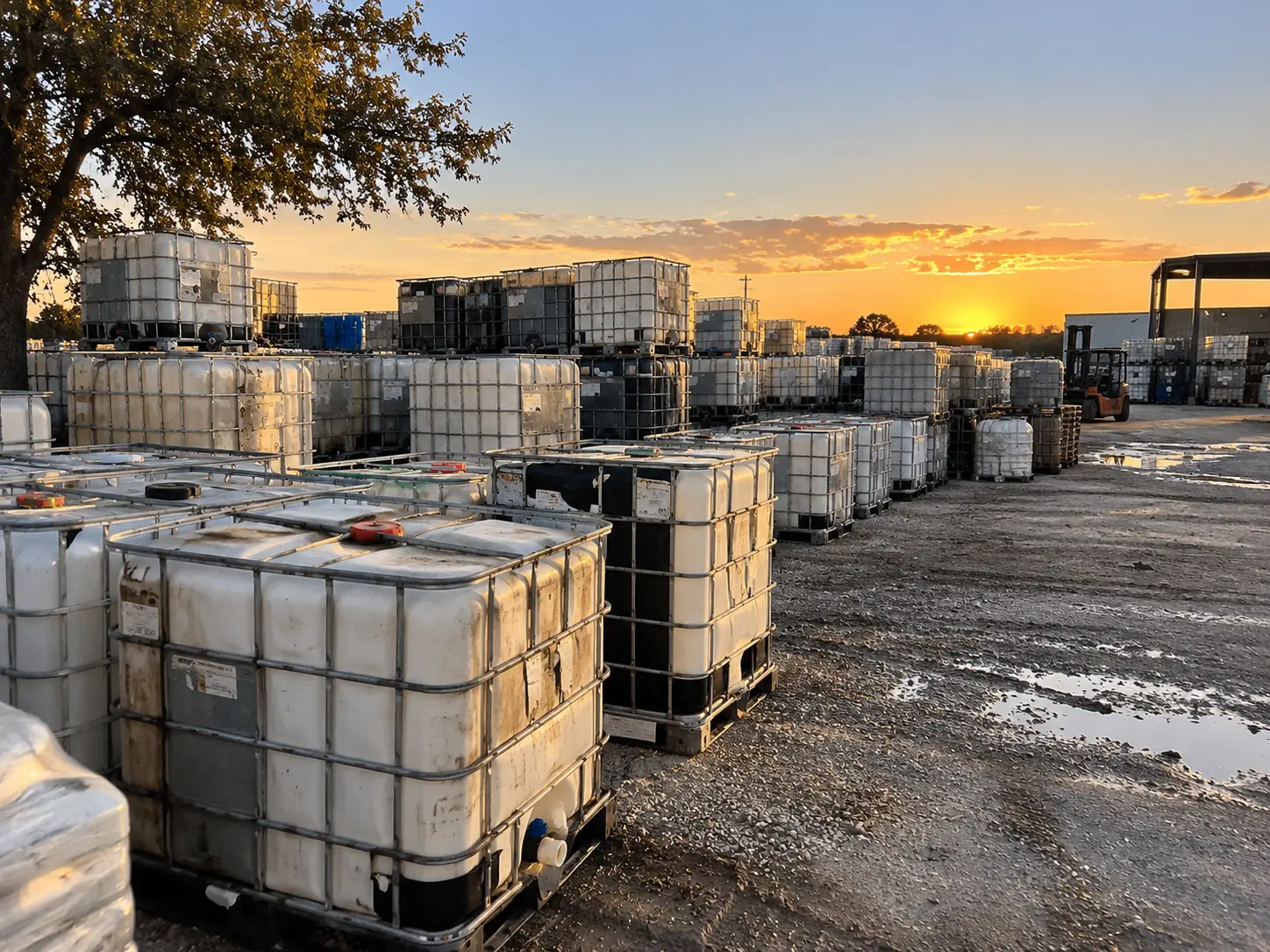
§ 00Used IBC totes · Harvey, Illinois · 48 states
Nothing
leaves the
loop.
A used IBC tote is not waste. It is a 60-pound HDPE bottle in a galvanised steel cage that somebody already paid the carbon for. We buy it, wash it, test it and send it back out — and when the bottle finally gives up, we grind it into resin instead of burying it.
- 412k
- In the loop
- 24.7k
- Diverted
- 0
- Landfilled
totes
tons
since 2016
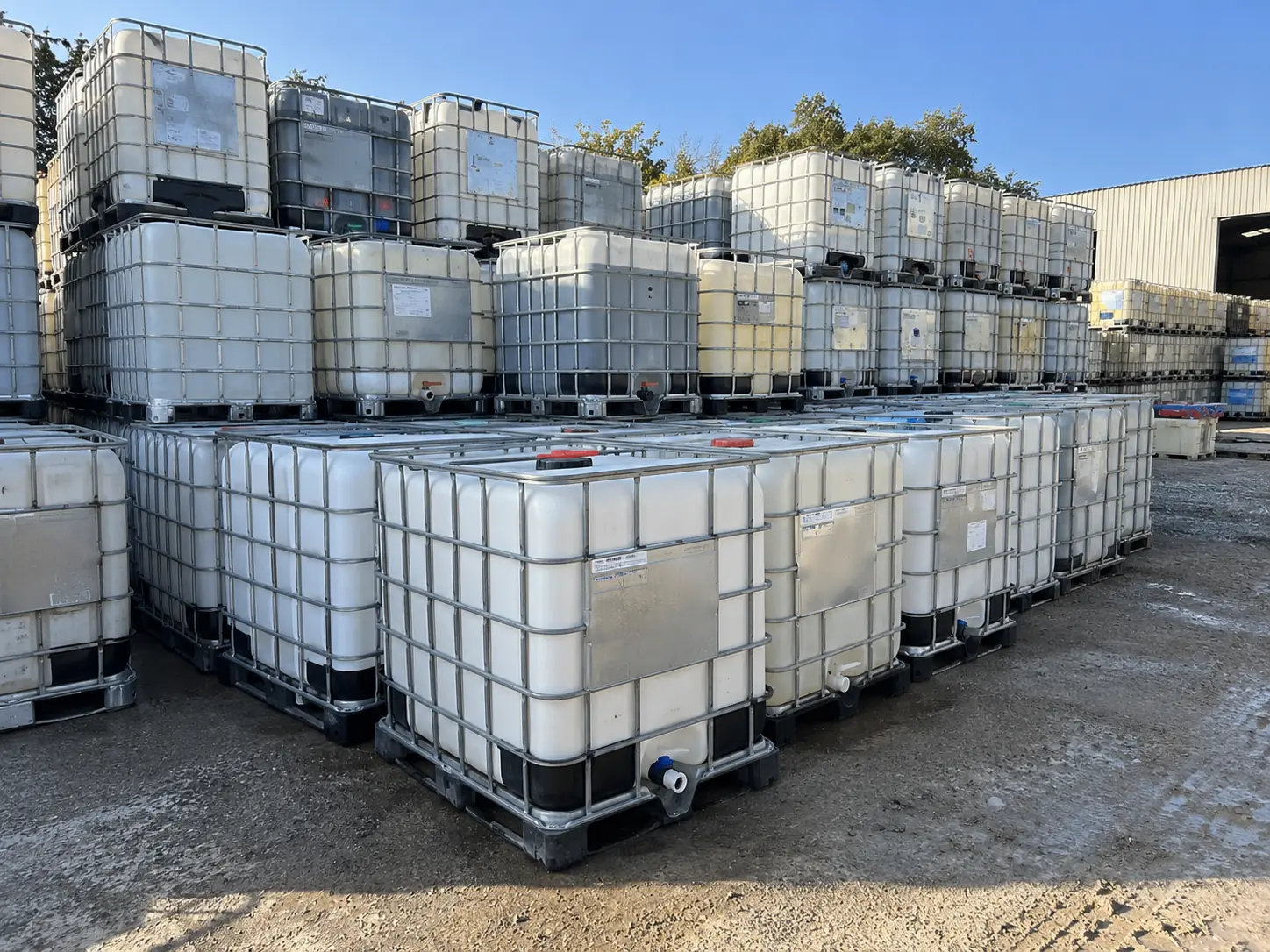
Stock on the ground
275 gal · 48" × 40" × 53"
Graded individually, every unit
- We buy empties by the pallet or by the truckload
- Triple-rinse wash line with 92% closed-loop water recovery
- UN/DOT 31HA1 recertification in house
- 48-state freight from one Illinois yard
- Food-grade stock segregated end to end
- Zero landfill — every component finds a next life
§ 01The whole argument, in one chart
Reuse beats recycling.
Recycling beats landfill.
Landfill is not an option.
Most of the carbon in an IBC tote is spent before it ever holds a liquid — moulding the bottle, galvanising the cage, trucking it to a filler. Every time a tote is reused, that carbon is amortised over another life instead of being spent again from zero.
lb CO₂e per 275-gallon tote, cradle to gate
- Manufactured new315lb
- Rebottled (new bottle, reclaimed cage)139lb
- Reprocessed into resin262lb
- Washed & reused53lb
A reconditioned tote carries roughly one-sixth of the embodied carbon of a new one. That gap is the entire reason this company exists.
83%
Less embodied carbon than a new tote
Wash, test and redeploy, and you keep the bottle, the cage and the pallet in service. Nothing is re-moulded, re-galvanised or re-shipped from a resin plant.
- Every tote is inspected before it is priced — nothing is bought sight-unseen and dumped.
- Wash water is filtered and recirculated; 92% of it never leaves the building.
- Bottles that fail pressure test are ground on site, not trucked to a landfill.
- Steel cages and pallets are straightened and reused, or baled for mill-grade scrap.
- Residues are captured, profiled and sent to licensed processors — never to drain.
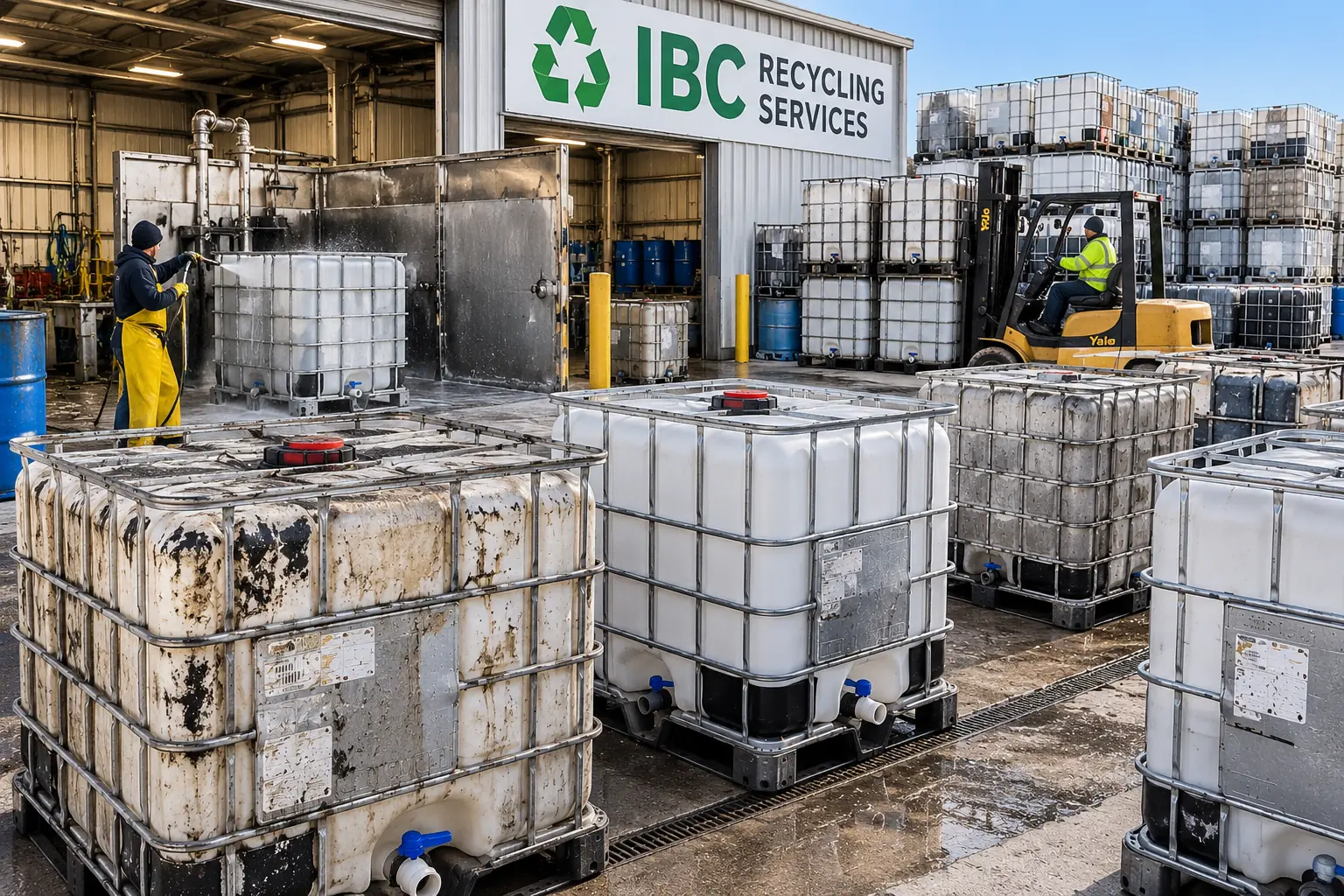
§ 01.5 — The wash line
This is where the carbon argument stops being theoretical.
Triple rinse, caustic or solvent as the residue demands, pressure test with a hold phase, recertify. Every unit, every time, in one building in Harvey, Illinois.
- 92%
- Wash water recirculated
- 100%
- Reuse stock tested
- 1,100/wk
- Units through the line
§ 02What we actually do
One vendor for the whole life of a tote.
Most companies do one slice — they sell totes, or they haul them, or they grind them. We run the entire loop under one roof, which is why we can pay more for your empties and charge less for your refills.
- S-01
We buy your totes
Cash for empty IBCs, washed or dirty, one pallet or a thousand. We quote off photos and pick up on our own trucks.
Paid on pickup - S-02
Wholesale supply
Truckload volumes of reconditioned, rebottled and food-grade totes, graded consistently and shipped nationwide.
48 states - S-03
Washing & reconditioning
Triple-rinse, caustic wash, pressure test, cage straightening and UN/DOT recertification on your own assets.
In-house line - S-04
Recycling & reprocessing
Granulation, hot wash and pelletizing of HDPE bottles that have reached the end of their service life.
Zero landfill - S-05
Transport & logistics
Flatbed, dry van and curtainside freight sized to tote loads, with dock-free pickup options.
Own fleet + partners - S-06
Tote asset programs
Managed pools for fillers who ship product out and want their containers tracked, returned and re-tested.
Closed loop
§ 03Stock on the ground
Four grades, one honest scale.
We publish what each grade actually means — previous contents, wash level, test status, cosmetic condition — so nobody opens a trailer and finds a surprise.
Reconditioned
Triple-rinsed, pressure-tested, original bottle. The workhorse of the catalog.
Rebottled
Brand-new bottle dropped into a reclaimed, straightened steel cage and pallet.
Food-grade
Unused bottles, segregated handling, documented previous-contents chain.
New
When a spec genuinely requires virgin material — and we will tell you when it doesn't.
And everything we build from the retired ones.
A bottle too scarred to hold chemicals is still a perfectly good rain harvester, aquaponics sump, planter bed, livestock waterer or jobsite washdown station. We cut, fit and finish them in the same building.
- 11formats
- Upcycled builds in catalog
- 38lb
- HDPE saved per build
- 100%
- Cage & pallet reused
- 0
- Builds sent to landfill
Rain harvesting through livestock watering.
Instead of moulding a new tank from virgin resin.
Straightened, re-welded where needed, re-used.
They outlive the tote's chemical service life.
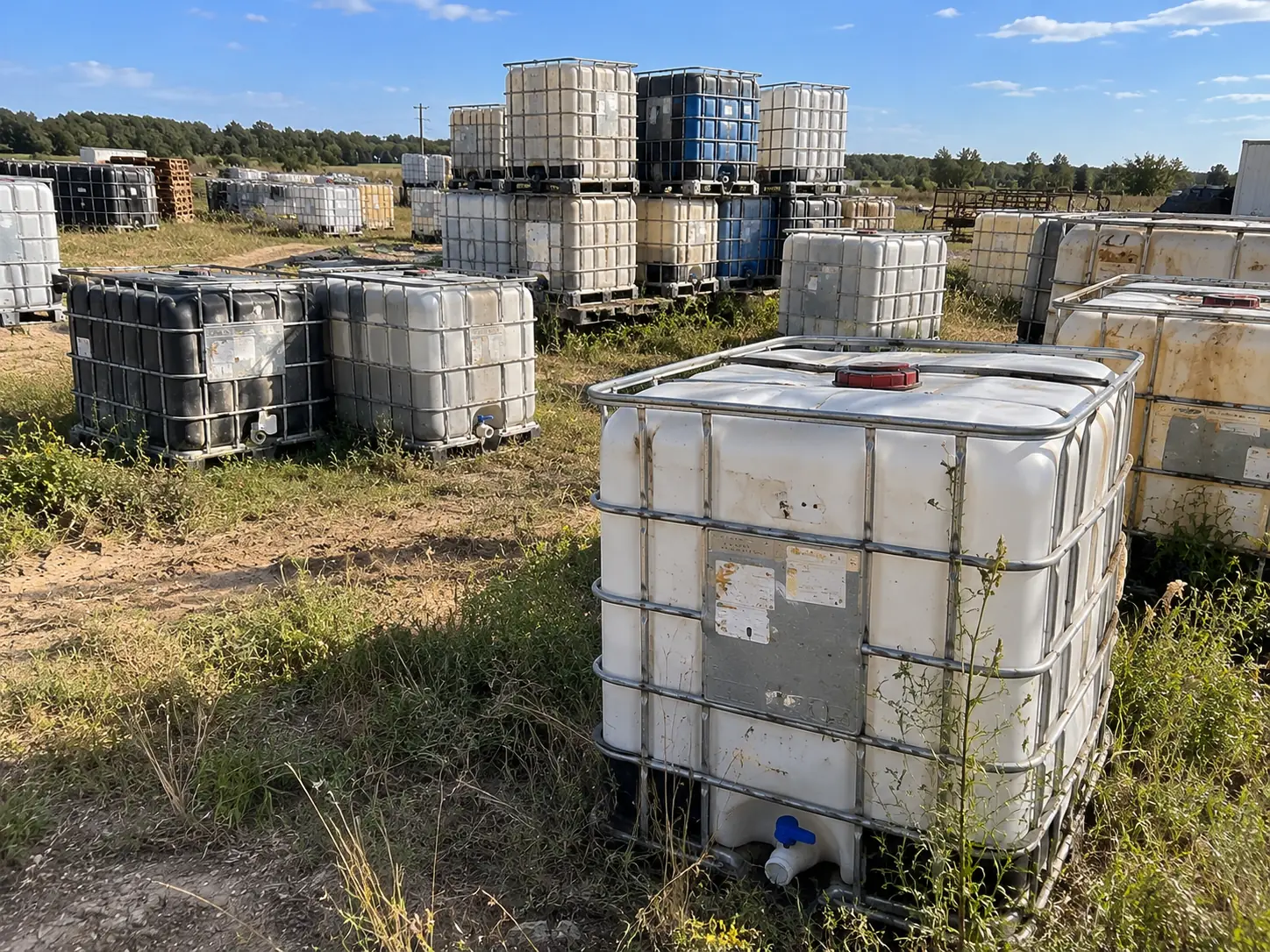
§ 03.9 — What we collect
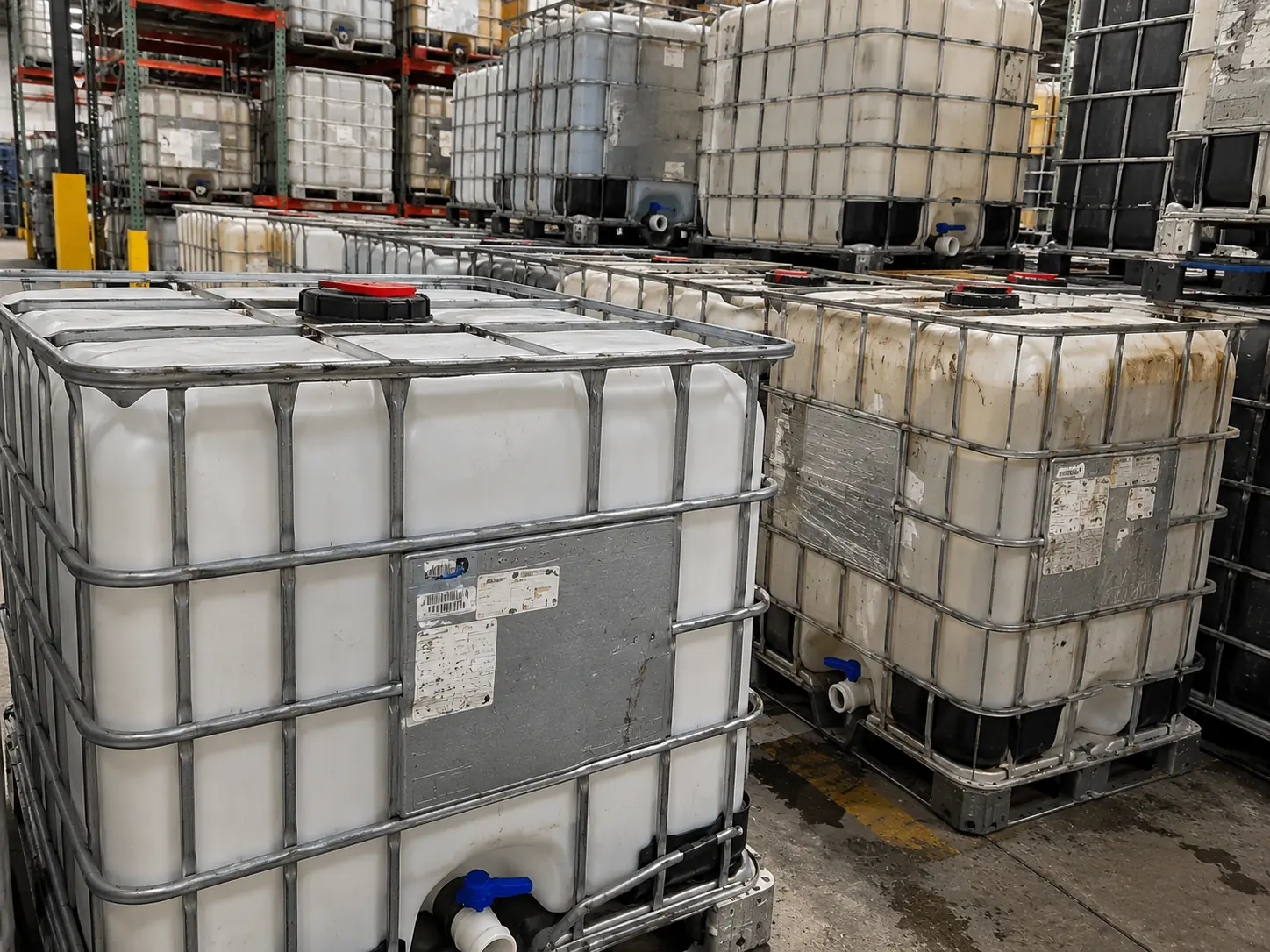
Every one of these is a container somebody already paid the carbon for.
Weathering is almost entirely cosmetic. A bottle that has sat empty under a tarp for six years usually still holds pressure — which is why 93.9% of what arrives here goes back out as a working container.
Sell us your empties§ 04Our unique instrument
Don’t take our word for it.
Run the numbers yourself.
Most sustainability pages give you a stock photo of a leaf. We built a calculator. Set your real volume, choose what happens to the totes, and watch the arithmetic resolve against the baseline of building them new.
Live instrument
The Reclaim Ledger
Set a quantity, choose what happens to the totes, and see exactly what staying in the loop is worth — measured against building the same totes new.
- Certificate
- RL-0IWB-LHO0
One truckload is roughly 48 totes. Drag to your real volume — or jump to a preset.
Reclaim path
31,440lb CO₂e
Emissions avoided
Same as taking 35,326 miles off the road.
94,320gallons
Process water saved
Equal to 5,484 eight-minute showers.
12,960lb
Virgin material displaced
HDPE resin plus steel cage and pallet stock never mined or moulded.
78.0cu yd
Landfill volume diverted
Measured crushed, as a landfill would actually receive them.
7,440kWh
Process energy avoided
Runs an average US home for 252 days.
655tree-years
Sequestration equivalent
What a stand of mature trees would absorb in a full year.
Against building new
120 totes, cradle to gate
- Manufactured new37,800lb CO₂e
- Through our reuse line6,360lb CO₂e
Baseline of 315 lb CO₂e per new 275-gallon composite IBC: virgin HDPE bottle, galvanised steel cage, pallet, moulding energy and inbound freight.
Your reclaim certificate
RL-0IWB-LHO0
Quote this number back to us and we can reproduce the exact calculation line by line — same quantity, same path, same factors.
- Quantity
- 120 totes
- Path
- Reuse
- Avoided
- 31,440 lb CO₂e
Want the full instrument, the per-tote factors and the methodology? Open the Reclaim Ledger.
§ 05How the loop closes
Seven stages, one building.
Collection, inspection, wash, test, rebottling, redeployment and reprocessing all happen at 16751 Lathrop Ave. Nothing gets subcontracted to somewhere we can't walk to.
- 01
You tell us what you have
Photos, previous contents and a rough count are enough. We price off that and confirm on arrival.
Typical response: under one business day
- 02
We pick it up
Our trailers are configured for tote loads — 48 on a flatbed, dock or no dock, forklift or not.
48 states · own fleet plus vetted carriers
- 03
Inspection and sort
Every unit is graded individually: bottle condition, cage geometry, pallet integrity, valve and cap condition, residue profile.
Grades AA through R
- 04
Wash, test, recertify
Triple rinse, caustic or solvent wash as the residue demands, pressure and leak test, UN/DOT recertification where the unit qualifies.
92% closed-loop water recovery
- 05
Rebottle or reprocess
Bottles that pass go back out. Bottles that fail are ground and hot-washed into recycled HDPE; cages and pallets are straightened for reuse.
Zero landfill since 2016
- 06
Back into service
Graded, labelled, documented and shipped — with the previous-contents chain travelling with the unit.
Full traceability
§ 06The reference nobody else publishes
A size guide you can actually plan a load around.
Capacities, footprints, stack heights, pallet types, resin codes, UN rating decoding and our full grading scale — written out, cross-referenced, and free.
| Capacity | Footprint (L × W) | Height | Tare | Per 53' trailer |
|---|---|---|---|---|
| 275 gal / 1,040 L | 48" × 40" | 53" | 125 lb | 48 units |
| 330 gal / 1,250 L | 48" × 40" | 62" | 148 lb | 48 units |
| 350 gal / 1,325 L | 48" × 42" | 66" | 165 lb | 40 units |
| 120 gal / 454 L | 40" × 32" | 42" | 78 lb | 80 units |
| 550 gal / 2,082 L | 60" × 48" | 72" | 290 lb | 26 units |
Tare weights are for composite HDPE-in-steel-cage units on plastic pallets. Steel and stainless formats differ substantially — see the full dimensions table.
Decoded
31HA1
- 31
- Composite IBC for liquids
- H
- Plastic inner receptacle
- A
- Steel outer frame
- 1
- Non-pressurised design type
§ 07Who we load for
Chemical blenders to breweries.
Anyone who receives liquid in bulk ends up with empty totes. We make that the easiest part of their week.
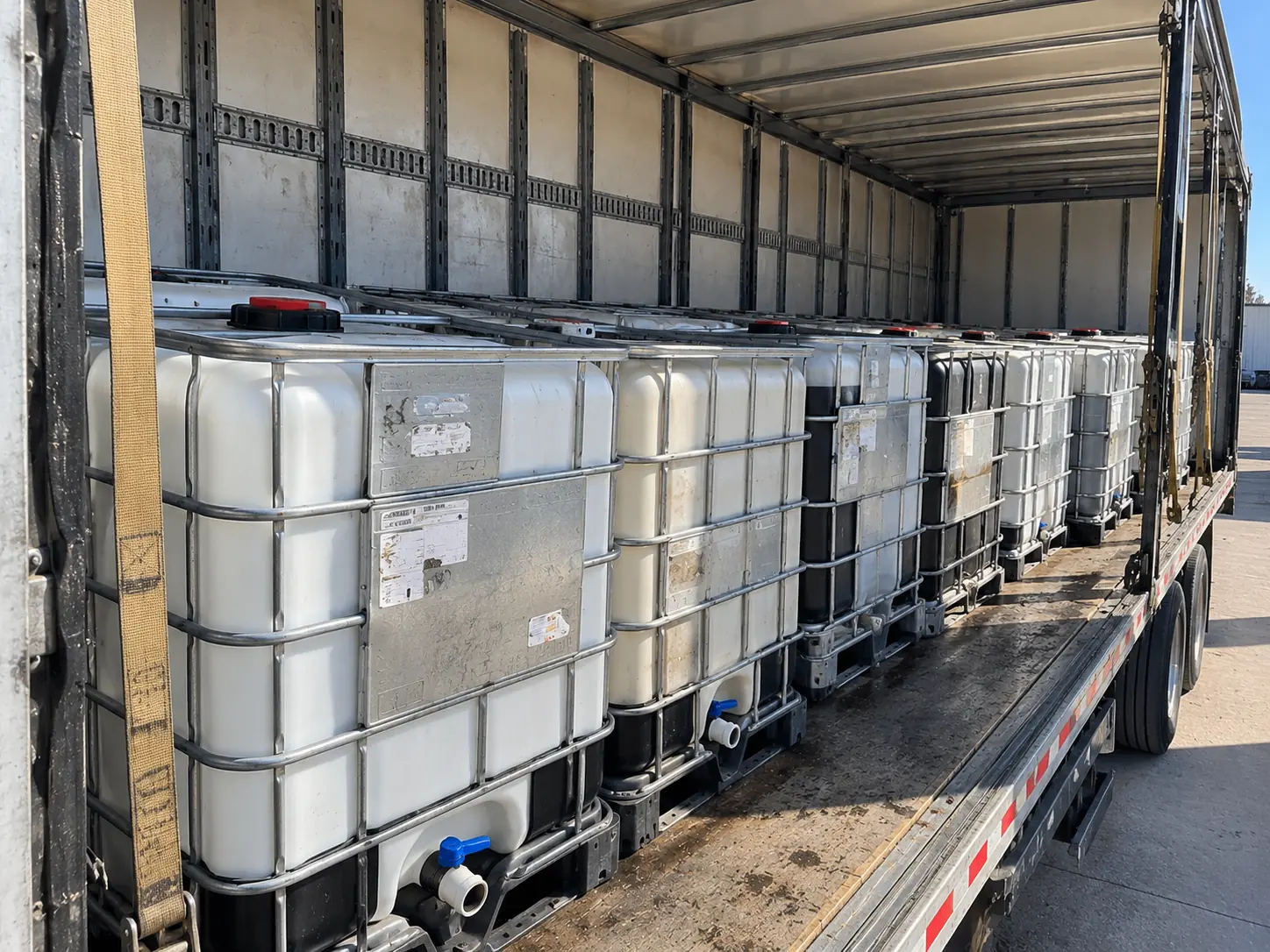
“We were paying to have empties hauled away. Now the same totes come back to us washed and recertified, and the line never notices the difference.”
- Chemical manufacturing & blending
- Food, beverage & flavour houses
- Agriculture & crop inputs
- Water treatment & municipal
- Craft breweries & distilleries
- Oilfield & industrial fluids
- Construction & concrete admixtures
- Waste brokers & environmental firms
§ 08From the reclaim floor
What we've learned, written down.
Sixteen years of grading, washing and hauling totes produces opinions. Here are the ones worth publishing.
- ART-01
Reconditioned vs. new: the honest comparison
Where a reconditioned tote is genuinely better, where it isn't, and the three specs that should decide it.
9 min read - ART-02
What actually makes a tote food-grade
FDA-compliant resin is the easy part. The paperwork, the segregation and the previous-contents chain are the hard parts.
11 min read - ART-03
The carbon math of reusing a tote
Every number behind the Reclaim Ledger, shown long-hand, including the ones that make reuse look less heroic.
14 min read
Two ways in
Got empties? Need refills? Either way, it starts the same.
One form, one specialist, one business day. Tell us the count and the previous contents and we will come back with a price and a pickup window.