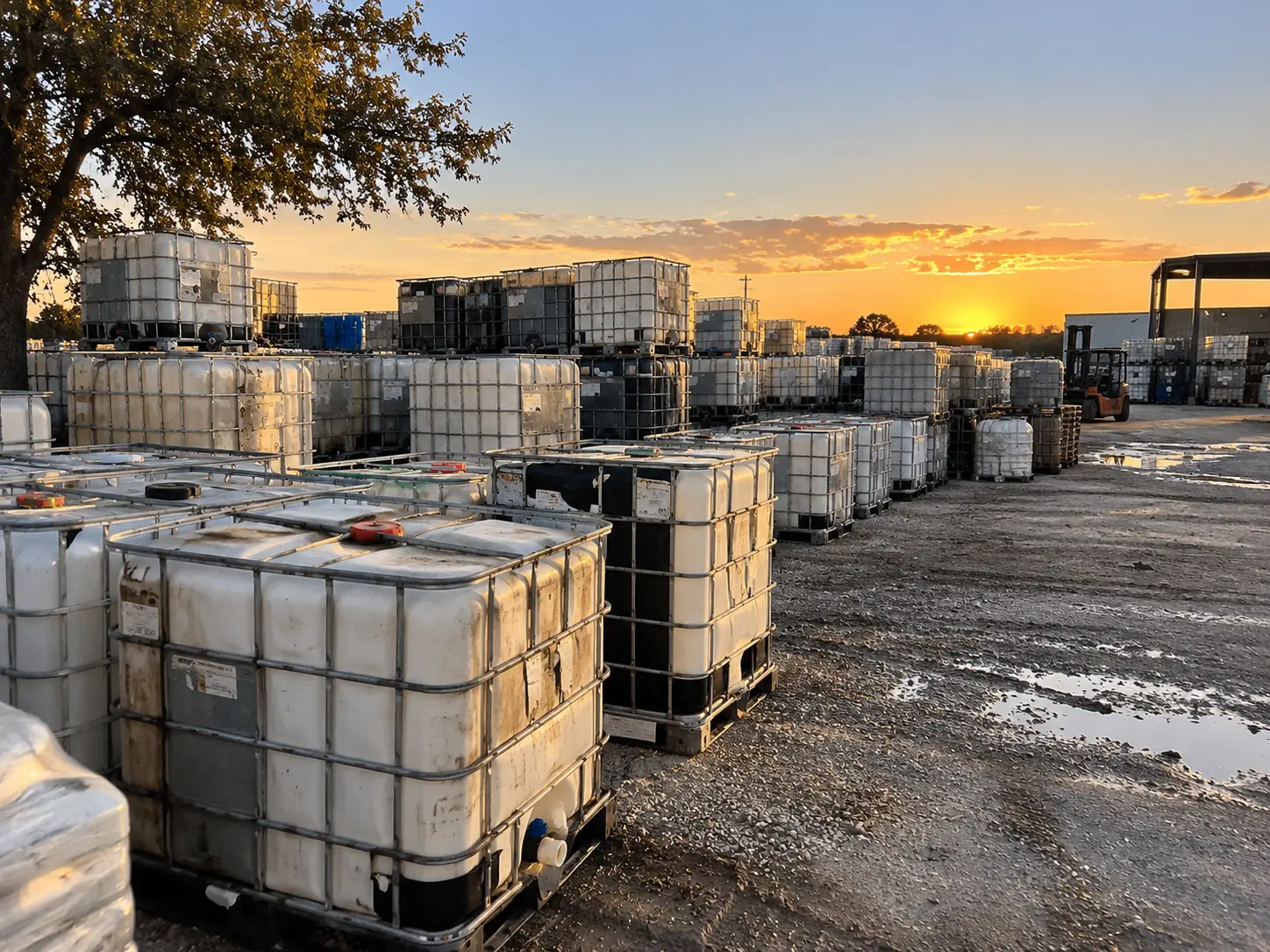
Sixty-one percent of the units arriving at our intake need a new valve. That figure says something useful: the valve is the component most likely to be at the end of its life while everything around it is fine.
Which means a substantial share of containers that get written off are written off for a reason that costs very little to fix — and fixing it involves no manufacturing carbon at all beyond the small part itself.
The five-minute inspection
Before any unit is retired, work through these five checks in order. The sequence is deliberate: cheapest fix first, most serious finding last.
- 01Does it leak at the gasket or at the valve body? Press a fingertip around the seal face while the valve is closed and under head. A gasket leak is a few dollars and five minutes; a cracked valve body is a replacement valve.
- 02Is the fill cap seal perished? Look for hardening, cracking or a permanent flat spot. A new cap and gasket is a ten-minute job and prevents both vacuum problems and rainwater ingress.
- 03Is the cage deformed enough to prevent stacking or forklift entry, or just scratched? Scratches are cosmetic. Deformation out of jig tolerance is the one finding here that genuinely ends a cage's service life.
- 04Is a pallet foot cracked? On most composite formats the pallet base is separately replaceable. A cracked foot is a base swap, not a retirement.
- 05Does the bottle hold pressure? If yes, nothing else on the unit is unfixable. If no, the cage and pallet still have value in a rebottling line.
What each repair actually involves
| Finding | Fix | Time | Skill |
|---|---|---|---|
| Weeping gasket | New gasket, correct compound | 5 min | None |
| Cracked valve body | New valve plus gasket | 10 min | None |
| Perished cap seal | New cap and gasket | 5 min | None |
| Cracked pallet foot | Replacement pallet base | 20 min | Forklift |
| Cage scratching, galvanising wear | None needed — cosmetic | — | — |
| Cage deformation in tolerance | Hydraulic straightening | Workshop | Skilled |
| Cage deformation out of tolerance | Scrap cage, reuse bottle | — | — |
| Bottle fails pressure test | Rebottle into the same cage | Workshop | Skilled |
Get the gasket compound right or repeat the repair
The commonest repair failure we see is a new gasket of the wrong compound, which weeps again within weeks. EPDM is fitted by default on most reconditioned units and it is precisely wrong for oil and solvent service.
- Petroleum, oils, hydrocarbons — Viton or Buna-N. EPDM will swell and fail.
- Aromatic or chlorinated solvents — Viton. PTFE if ketones are involved, because ketones attack Viton.
- Food contact or above 250 °F — silicone.
- Aqueous, caustic, surfactant, glycol, brine, fertiliser — EPDM, and you are done.
And never reuse a gasket. It takes a permanent compression set, which means the second installation starts with a part that has already used up its ability to deform into a seat face.
The carbon case for repair
A repair is the lowest-impact intervention available on a container, by a wide margin, because the alternative is not a free replacement — it is manufacturing.
- 315lb CO₂e
- New replacement unit
- 53lb CO₂e
- Reconditioned replacement
- ~0lb CO₂e
- A gasket and a valve
- 61%
- Of intake needing a valve
There is no freight, no wash, no test and no grading in a repair you do yourself. It is the one intervention in this whole subject where the carbon cost rounds to the cost of the part.
A spares shelf worth keeping
If you run more than a handful of totes, these items on a shelf will keep containers in service that would otherwise be written off while somebody waits for a purchase order.
- Gasket kits in the compound your chemistry needs — labelled by compound, because unlabelled mixed stock guarantees the wrong one gets fitted
- Two spare 2-inch ball valves with the outlet you actually use
- Spare 6-inch buttress caps, vented if you gravity-discharge
- Dust caps and plugs for discharge outlets
- One buttress-to-NPT adapter per connection standard you run
Five line items. The gasket kits alone will pay for the shelf.
Before you write anything off
Two questions. Does the bottle hold pressure? And if not, is the cage square and the welds sound? If either answer is yes, that unit has value — as a container in the first case, and as a rebottling candidate in the second.
A yard of units written off on the first finding rather than the fifth is the most common unnecessary loss in tote ownership, and it takes five minutes a unit to avoid.